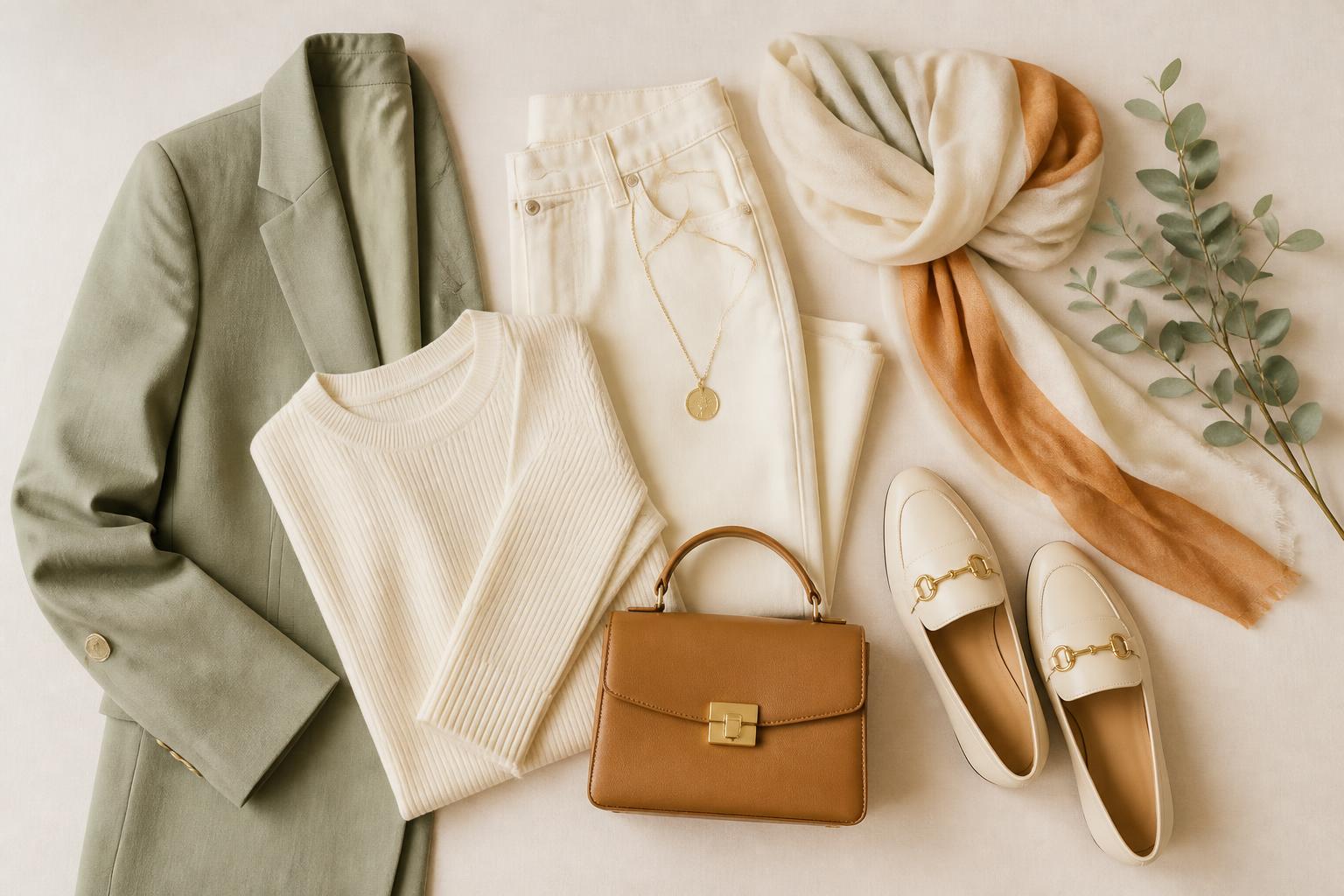
Choosing which colours go well together can feel intimidating when building outfits, but mastering a few simple pairing rules can make getting dressed stress-free. This guide will help you combine colours confidently, with clear tips for mixing and matching based on what’s already in your wardrobe.
Understanding Colour Basics
The Colour Wheel: Your Foundation
Knowing a little about the colour wheel can help you unlock endless outfit combinations:
- Primary colours: Red, blue, and yellow
- Secondary colours: Orange, green, and purple (created by mixing primary colours)
- Tertiary colours: Mixes like teal, magenta, and chartreuse
Using the wheel, certain colour relationships work especially well in outfits:
- Complementary colours: Opposites on the wheel (e.g., blue and orange), for bold looks
- Analogous colours: Neighbours on the wheel (e.g., green and blue), for harmonious blending
- Monochromatic colours: Different shades of the same colour, for sophisticated simplicity
Neutral Colours: A Safe Bet
Neutrals are colours like black, white, grey, navy, beige, or tan. They pair effortlessly with almost anything and serve as the easiest base for colourful accent pieces.
Practical Colour-Pairing Rules for Everyday Outfits
1. The Two-Colour Rule
For everyday dressing, stick to a main colour plus a coordinating neutral. This makes your outfit feel put-together without being overwhelming.
- Navy + white
- Black + camel
- Burgundy + grey
Tip: Use the dominant colour for larger garments (trousers or tops) and the neutral for layering pieces (cardigans or jackets).
2. Pops of Colour with Neutrals
If you love colourful accessories or statement pieces, keep your base neutral and add one standout shade for a confident splash of colour.
- All-black base with red shoes
- White shirt, grey jeans, and mustard bag
- Beige dress with teal scarf
Tip: Anchor your outfit with 2–3 neutrals before adding in a pop of colour.
3. Analogous Colour Pairing
Choose two or three colours side by side on the colour wheel for an easy, coordinated look that isn’t too bold—think greens and blues or pinks and reds.
- Olive trousers, emerald jumper, and light blue trainers
- Peach top and coral skirt
- Lavender blouse and violet accessories
Tip: Let one colour dominate, with the second as an accent.
4. Complementary Colour Pairing
Pair colours from opposite sides of the wheel for a statement look that remains visually balanced.
- Blue jeans and orange T-shirt
- Purple skirt with yellow cardigan
- Green dress with a pink belt
Tip: Ground bold pairings with a neutral piece (like a brown handbag or white trainers).
5. Monochrome Outfits
Wearing shades and tints of a single colour creates a modern, chic effect.
- Light blue jeans, denim jacket, and navy top
- Camel jumper, beige trousers, tan boots
- Charcoal blazer with silver-grey trousers
Tip: Vary the texture or shade for visual interest.
Useful Tips for Building Outfits with Colour
Mind the Occasion
- Work/Smart events: Muted or classic pairings (navy, grey, black, soft pastels)
- Casual days: Play with bolder, brighter combinations
- Evening: Jewel tones (emerald, ruby, sapphire) pop against dark neutrals
Stick to a Maximum of Three Colours
Outfits with more than three main colours can become busy. When in doubt, simplify:
- Main colour
- Neutral
- Accent colour
Use Patterns Thoughtfully
If you wear patterned items, match one of the colours in the pattern with a plain garment elsewhere for a harmonised look.
- Floral skirt (yellow/green) with plain green T-shirt
- Striped top (navy/white) with white jeans
Check Your Undertones
Colours that suit your skin’s undertone (warm, cool, or neutral) are more flattering:
- Warm undertone: Cream, camel, olive, burnt orange
- Cool undertone: Grey, navy, blue, raspberry, emerald
- Neutral undertone: Most shades, especially classic neutrals
How to Make Colour-Pairing Easier
Choosing outfits doesn’t need to be a guessing game. Tools like DressedByAI help you mix and match the pieces you already own, showing you colour combinations tailored to your wardrobe and preferences—so you can try out new pairings confidently before stepping out the door.
Quick Reference Cheat Sheet
- Black goes with: Everything, especially white, grey, red, pink, yellow
- Navy goes with: White, tan, yellow, red, blush pink
- Grey goes with: Pink, blue, mustard, maroon, most colours
- Beige and camel go with: Olive, burgundy, navy, white
- Brights: Complement with opposite brights or mute with neutrals
Final Thoughts
Building stylish outfits is much simpler when you stick to basic colour-pairing rules. Start small with neutrals and add in colour as you get bolder. If you’re ever stuck, let DressedByAI do the work—using your actual wardrobe to suggest outfits (and colour pairings) you might not have tried otherwise.